Understanding What Your Lab Results Really Mean
Blood work is one of the most useful tools your primary care provider has for understanding what is happening inside your body. However, when patients open their lab results and see a long list of numbers, abbreviations, and reference ranges, those results can raise as many questions as they answer.
What does it mean when one number is slightly high? Does a normal result mean everything is fine? Can blood work explain why you feel tired, have gained weight, or simply don’t feel like yourself?
The answer isn’t always straightforward.
Blood tests can provide important information about your overall health and help identify potential concerns early. However, they represent only one part of your health picture. Your symptoms, medical history, medications, lifestyle, family history, physical exam, and changes over time can all influence how your provider interprets your results.
That’s why understanding what blood work can tell you—and what it can’t—is so important.
Why Routine Blood Work Matters
Your provider may recommend blood work as part of an annual exam, when you’re experiencing new symptoms, or to monitor an existing health condition. The specific tests you need will depend on your age, health history, risk factors, medications, and current concerns.
One of the biggest advantages of routine testing is the ability to establish a baseline. When your provider has previous results to compare, they can look for changes and trends instead of evaluating one isolated number.
For example, a result that falls within the laboratory’s standard reference range may still represent a meaningful change for you. Likewise, a slightly abnormal result doesn’t automatically indicate a medical problem.
Routine blood work may also help identify certain health concerns before you notice obvious symptoms. In addition, providers can use testing to monitor chronic conditions, evaluate how well a treatment is working, and make more informed decisions about your preventative care.
This is one reason laboratory testing can be an important part of a comprehensive annual checkup. Rather than simply reacting when something feels wrong, you and your provider can use appropriate screenings and testing to better understand your health over time.
Common Blood Tests Your Primary Care Provider May Order
There isn’t one universal set of blood tests that every person needs. Instead, your primary care provider selects tests based on what makes sense for you.
Still, several types of blood work commonly appear in routine primary care.
Complete Blood Count (CBC)
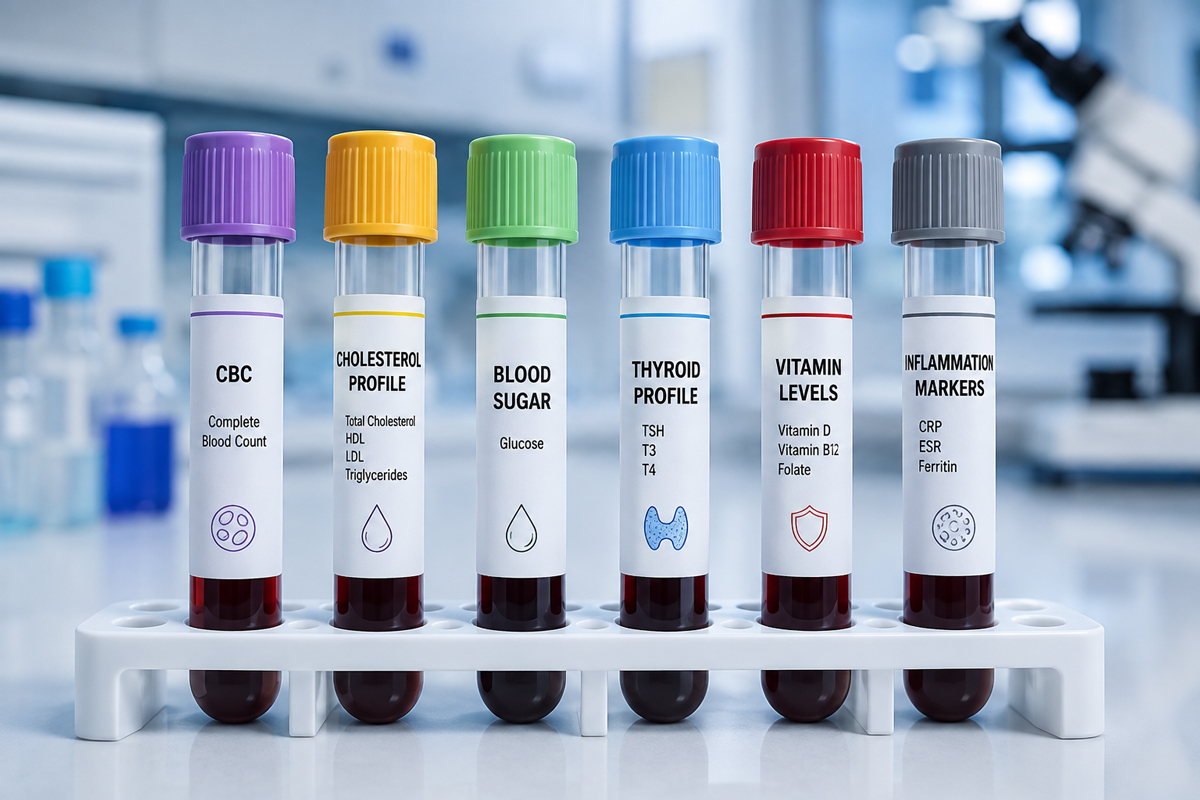
A complete blood count, or CBC, measures several components of your blood, including red blood cells, white blood cells, platelets, hemoglobin, and hematocrit. Providers commonly use a CBC as part of routine care or when evaluating certain symptoms.
For example, red blood cell and hemoglobin measurements can provide clues about anemia and other conditions. White blood cells play an important role in your immune system, so changes in their numbers may occur with infections, inflammation, immune disorders, medications, and other health issues. Platelets, meanwhile, help your blood clot.
According to MedlinePlus’s guide to complete blood counts, a CBC can help providers evaluate conditions such as anemia, infections, immune system disorders, and other medical concerns. However, an abnormal CBC result doesn’t necessarily identify the underlying cause by itself.
Cholesterol Panel
A cholesterol or lipid panel helps your provider assess cardiovascular risk. It commonly measures:
- LDL cholesterol, sometimes called “bad” cholesterol
- HDL cholesterol, often called “good” cholesterol
- Triglycerides, a type of fat found in the blood
- Total cholesterol
These numbers become more useful when your provider considers them alongside factors such as your blood pressure, age, smoking history, family history, diabetes risk, activity level, and overall health.
In other words, cholesterol results shouldn’t exist in a vacuum. A primary care provider can help put those numbers into context and determine whether lifestyle changes, additional monitoring, or treatment may be appropriate. The NIH has a great resource that breaks down this cholesterol panel.
Blood Sugar and A1C Testing
Blood glucose testing can provide information about how your body manages sugar. Depending on your individual health needs, your provider may check fasting glucose, random glucose, or hemoglobin A1C.
A1C is especially useful because it provides an estimate of your average blood sugar level over approximately the previous three months. Providers commonly use it to screen for or monitor prediabetes and diabetes.
However, as with other laboratory results, your provider may need to interpret an abnormal result in the context of other information or confirm it with additional testing.
Thyroid Function
If you’re experiencing symptoms such as unexplained fatigue, weight changes, changes in heart rate, or unusual sensitivity to heat or cold, your provider may consider thyroid testing.
One of the most common thyroid blood tests measures thyroid-stimulating hormone (TSH). Depending on your results and symptoms, your provider may also order additional thyroid tests.
Thyroid testing is particularly relevant because many symptoms associated with thyroid dysfunction overlap with other health concerns. Fatigue or difficulty managing weight, for example, doesn’t automatically mean you have a thyroid problem. Your provider needs to consider your symptoms alongside your lab results and overall health.
This is also where conversations about hormones and weight loss become important. Hormones can affect metabolism, appetite, energy, and other aspects of health, but your provider needs to look at the larger clinical picture rather than attributing every symptom to one hormone level.
Vitamin and Iron Levels
Blood testing can also help identify certain nutritional deficiencies. Depending on your symptoms and risk factors, your provider may check levels such as:
- Vitamin D
- Vitamin B12
- Iron and related markers
These tests aren’t necessarily appropriate as routine screening for every patient. Instead, your provider may recommend them when your symptoms, diet, medications, health history, or other laboratory results suggest that additional information would be useful.
For instance, fatigue can have many possible causes. An iron or vitamin deficiency may contribute in some cases, while sleep problems, thyroid disorders, stress, medications, infection, or other conditions may explain similar symptoms in others.
Inflammation Markers
Your provider may sometimes order blood tests such as C-reactive protein (CRP) or erythrocyte sedimentation rate (ESR) to look for signs of inflammation.
These tests can tell a provider that inflammation may be present, but they generally don’t explain exactly what is causing it. Inflammation can occur for many reasons, including infections, autoimmune conditions, injuries, and other illnesses.
Therefore, an elevated inflammatory marker is usually a clue—not a diagnosis.

What Blood Work Can’t Tell You
With so much health information available through a blood draw, it’s easy to assume that comprehensive blood testing can reveal nearly everything about your health. It can’t.
Blood work does not replace a physical exam, detailed medical history, or conversation with your healthcare provider. It also cannot detect every illness or explain every symptom.
Perhaps most importantly, normal blood work doesn’t automatically mean that nothing is wrong.
You can have symptoms that deserve further evaluation even when common laboratory tests fall within their reference ranges. Conversely, you can have an abnormal result without having a serious medical condition.
Factors such as medications, hydration, physical activity, menstruation, diet, and other circumstances can affect certain test results. Even a CBC result outside the expected range doesn’t necessarily mean you have a condition requiring treatment.
That’s why interpreting lab work requires more than looking for red flags next to numbers on a patient portal.
Why Your Symptoms Matter Just as Much as Your Numbers
Good primary care doesn’t treat a laboratory report. It treats the person sitting in the exam room.
If you’re experiencing persistent fatigue, unexplained weight changes, pain, digestive problems, changes in sleep, or another ongoing concern, your provider should consider those symptoms even when your initial blood work looks reassuring.
Likewise, your medical history can change the significance of a particular result. Family history, medications, previous diagnoses, lifestyle factors, and changes from your own baseline can all provide context that a standard reference range cannot.
The MedlinePlus overview of blood testing notes that blood tests can provide important health information across many areas, from blood cell counts and glucose to cholesterol and other markers. Still, laboratory testing works best as one part of a broader clinical evaluation.
At Pine Point Medical, this whole-person approach to primary care helps our providers connect the numbers with what you’re actually experiencing. Instead of focusing on one isolated result, we can look at patterns, symptoms, health history, and individual risk factors to determine what those results may mean for you.
When Additional Testing May Be Needed
Sometimes, initial blood work provides the answer. Other times, it points your provider toward the next question.
An unexpected result may need to be repeated, particularly when it doesn’t fit with your symptoms or previous results. Your provider may also order more specific blood tests, imaging, or other diagnostic testing based on what the initial evaluation reveals.
Similarly, persistent symptoms may justify further evaluation even when routine blood work appears normal.
The goal isn’t to order every possible test. Instead, thoughtful primary care uses the information from your symptoms, history, physical exam, and appropriate testing to determine what should happen next.
Understanding Your Blood Work Starts With the Bigger Picture
Blood work can provide valuable insight into your health, but the numbers are most useful when someone interprets them in context. A slightly abnormal result may not necessarily signal a serious problem, while normal results don’t always explain why you’re experiencing symptoms.
That’s where an ongoing relationship with a primary care provider can make a difference. Instead of viewing each test as an isolated snapshot, your provider can compare results over time, consider changes in your health, and determine whether additional evaluation makes sense.
If something on your lab report concerns you, don’t assume the worst based on a flagged result or an internet search. Likewise, don’t ignore persistent symptoms simply because your blood work came back “normal.” Talk with your provider about what the results mean specifically for you.
Frequently Asked Questions About Blood Work
How Often Should Routine Blood Work Be Done?
There isn’t one blood work schedule that’s right for everyone. Your age, medical history, medications, existing conditions, symptoms, and individual risk factors can all influence how frequently your provider recommends testing.
Some patients may have blood work as part of an annual physical, while others may need more frequent testing to monitor a health condition or medication. Healthy adults without specific risk factors may not need every test every year.
Your primary care provider can help determine which tests are appropriate and how often you should have them.
Should I Fast Before Blood Work?
It depends on the tests your provider orders. Some blood tests may require fasting, while many others do not.
If fasting is necessary, your healthcare team should provide instructions about how long to avoid food and whether you can continue drinking water or taking your regular medications.
Don’t assume you need to fast simply because you’re having blood drawn. When in doubt, ask before your appointment.
Can Blood Work Detect Cancer?
Some blood tests can identify abnormalities that may lead a provider to investigate further, and certain specialized blood tests can play a role in evaluating or monitoring particular cancers. However, routine blood work cannot reliably rule out or diagnose all cancers.
Cancer screening often involves other tools, such as mammograms, colon cancer screening, Pap tests, imaging, physical examinations, or other tests depending on a person’s age and risk factors.
This is another reason regular preventative care matters. Your provider can recommend appropriate screenings based on your individual health history rather than relying on blood work alone.
What Happens if One Result Is Abnormal?
First, don’t panic.
A result outside the laboratory’s reference range doesn’t automatically mean you have a medical condition. Your provider may consider how far outside the range the result falls, whether you’ve had similar results before, your symptoms, medications, health history, and the results of other tests.
Sometimes, the appropriate next step is simply repeating the test. In other cases, your provider may recommend additional testing or treatment.
One abnormal number is rarely the entire story.
Why Do I Feel Unwell if My Blood Work Is Normal?
Routine blood work only measures specific aspects of your health. Therefore, it’s possible to experience very real symptoms even when commonly ordered laboratory tests fall within standard reference ranges.
If symptoms continue, tell your provider. They may need to reconsider possible causes, review medications and lifestyle factors, perform additional testing, or explore conditions that don’t necessarily appear on routine blood work.
Your symptoms are information, too.
Have Questions About Your Blood Work?
Understanding what blood work can tell you is only one part of understanding your overall health. At Pine Point Medical, we look at lab results alongside your symptoms, medical history, lifestyle, risk factors, and individual health goals to help you make informed decisions about your care.
Whether you’re due for an annual exam, have questions about recent lab results, or aren’t feeling like yourself despite “normal” blood work, our team can help you determine the appropriate next steps.
Contact Pine Point Medical today to schedule an appointment or learn more about our primary care services in Lansing, Ithaca, and throughout the Finger Lakes region.